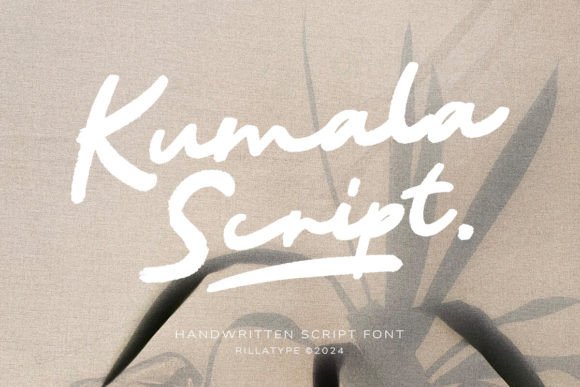
Finding Warmth in a Digital World: The Kumala Script Font
There is a specific kind of magic that happens when you hold a pen on paper. It’s not perfect. The ink bleeds slightly at the corners of the letters, the pressure varies as you write your name, and the slant isn't entirely uniform. It is, undeniably, human. In an era defined by the crisp, sterile precision of vector paths and screen pixels, we often crave that human element. We want our digital communications to feel like a conversation, not a broadcast. This is exactly where the Kumala Handwritten Script finds its voice. It is a premium font designed not to replicate the perfection of a machine, but to embrace the artistic finesse and charming imperfections of the human hand.
For designers, entrepreneurs, and creatives, typography is more than just legible text; it is the tone of voice for a brand. When you choose a typeface, you are choosing the personality that greets your audience. Kumala Script captures the essence of hand-drawn strokes with fluid lines that dance across the page. It brings a warmth to the screen that rigid sans-serif fonts simply cannot achieve. Whether you are a small business owner looking to soften your brand identity or a graphic designer working on a wedding invitation, understanding how to leverage this style of modern typography can transform your project from a standard layout into a piece of art.
The Anatomy of a Handwritten Typeface
What makes a script font like Kumala work? It comes down to the details of the stroke. Unlike traditional calligraphy fonts that can be overly rigid or formal, or casual fonts that look like teenage graffiti, Kumala sits in a sweet spot of elegance and informality. It utilizes OpenType features to mimic the natural variation of handwriting. If you type the same letter twice in a row, a well-crafted font will often swap out alternate glyphs so they don't look like identical twins standing next to each other. This subtle variation is crucial for breaking the "digital look."
The visual appeal of Kumala lies in its fluidity. The connecting strokes between letters are smooth, creating a continuous flow that guides the eye naturally from left to right. This is particularly important for logo design and brand identity work. When a customer sees a logo written in Kumala, they don't just read the name; they feel a sense of approachability. It suggests that there is a person behind the brand, not just an algorithm. This is the "human touch" that marketing professionals constantly seek. It builds trust before the customer has even read the "About Us" page.
Practical Applications: Where Kumala Shines
One of the most valuable traits of a creative font is versatility. You don't want a typeface that only works on one specific type of project. Kumala is designed to be a workhorse for various creative expressions, bridging the gap between digital and print media.
Consider the world of packaging design. If you are selling artisanal goods—perhaps homemade candles, organic skincare, or boutique coffee—your packaging needs to reflect the care you put into the product. A stiff, corporate font feels out of place on a kraft paper label. Kumala, however, complements organic textures. Its warm, inviting vibe pairs beautifully with earthy color palettes and textured papers, instantly communicating "handmade" and "authentic" without saying a word.
In the realm of social media graphics, attention spans are short. You have milliseconds to stop a user from scrolling. Bold, geometric fonts are great for headers, but they can feel cold. Using Kumala for quotes, callouts, or "Swipe Up" instructions adds a layer of personality to your Instagram Stories or Pinterest pins. It feels like a friend writing a note to you, which increases audience engagement. For bloggers and content creators, using this font for pull quotes within an article can break up long blocks of text, making the reading experience more dynamic and less fatiguing.
Strategic Branding and Marketing Assets
For the entrepreneur, every visual asset is an opportunity to reinforce brand recognition. Consistency is key in branding, but consistency doesn't mean monotony. It means having a cohesive set of tools—colors, imagery, and typography—that work together harmoniously.
Kumala Script is an excellent addition to a brand’s typography toolkit. However, it is important to treat script fonts as accent fonts rather than body copy fonts. While Kumala is legible, extended paragraphs of handwritten text can be tiring to read on a screen. The professional presentation of your brand relies on the readability of your message.
Therefore, the best practice is to use Kumala for high-impact moments. Use it for your main logo, the headers of your website, or the subject lines of your email newsletters. Pair it with a clean, geometric sans serif font for the body text. This contrast creates a visual hierarchy that is both aesthetically pleasing and functional. The Kumala draws the eye in, and the sans-serif delivers the information clearly. This combination elevates your design, ensuring it looks professional while retaining a friendly demeanor.
Editorial Design and Print Materials
Beyond the digital screen, Kumala finds a natural home in editorial design and print materials. Think about the last time you received a piece of mail that felt personal. In a stack of bills and junk mail, an envelope addressed in a script font stands out immediately. This makes Kumala a perfect choice for direct mail marketing, thank-you cards to loyal customers, or event invitations.
For those in the event industry—wedding planners, florists, or stationers—this font is a design asset that solves many problems. It captures the romance required for wedding invitations but maintains the modern edge needed for contemporary events. It works beautifully on posters for local markets or boutique sales, adding a touch of whimsy that a standard serif font might lack.
Furthermore, the rise of the creator economy has led to an explosion of digital products. If you are selling planners, e-books, or printable wall art on platforms like Etsy, the typography you use defines the perceived value of the product. A wall art print featuring an inspirational quote in Kumala Script feels like a piece of decor you’d buy in a boutique, not just a digital download. It adds a premium feel to your offerings, justifying the price point and enhancing the customer's experience.
Mastering the Pairing: A Guide to Harmony
Choosing the right font style is only half the battle; the other half is knowing who to introduce it to. Font pairing is an art form, and getting it wrong can make your design look chaotic. Because Kumala has such a distinct personality, it needs a partner that can play the supporting role without competing for the spotlight.
A general rule of thumb when pairing a script font like Kumala is to look for a sans serif font that has a neutral personality. Fonts like Montserrat, Lato, or Open Sans are excellent choices. They provide a clean, modern canvas that allows the flourishes of Kumala to pop. Avoid pairing it with other decorative fonts or overly ornate serifs, as this will create visual clutter and hurt readability.
When testing your pairings, pay attention to weight and size. If your Kumala header is too thin, it might get lost against a bold sans-serif body. Conversely, if the Kumala is too large, it might overwhelm the layout. The goal is balance. Use the script font to inject emotion and draw attention to the key message, and use the secondary font to handle the heavy lifting of information delivery.
Technical Considerations and Licensing
Before integrating any new font into your workflow, it is vital to review the technical specifications and licensing terms. Kumala Script comes with a range of characters, often including numerals, punctuation, and multilingual support. Always check the character map provided by the font creator to ensure it supports the specific languages you need for your audience.
Additionally, if you are using this font for commercial purposes—which includes client work, merchandise, or products for sale—you must ensure you have the correct commercial font license. Most premium fonts come with a license that covers specific uses. Read the fine print regarding "print-on-demand" services or app usage if those are relevant to your business. Respecting licensing not only keeps you legally compliant but also supports the independent designers who craft these beautiful tools.
Ultimately, the goal of using a font like Kumala is to bridge the gap between you and your audience. It is a tool for visual communication that speaks of warmth, creativity, and attention to detail. By embracing the fluid, handwritten nature of Kumala Script, you are doing more than just decorating a page; you are inviting your audience into a space that feels personal, authentic, and distinctly human. Whether it graces the header of a startup’s website or the label of a homemade jam jar, it brings a touch of artistic finesse that resonates long after the first glance.